Chemical Hygiene Plan
This web-based Chemical Hygiene Plan (CHP) must be readily available to personnel in Virginia Commonwealth University facilities where hazardous chemicals are present.
The CHP and the associated tools have been provided to support the efforts of VCU to manage personnel exposure to hazardous materials and meet requirements established by regulatory and industry standards, such as the Occupational Safety and Health Administration (OSHA) regulations for “Hazard Communication” (29 CFR 1910.1200), “Occupational Exposure to Hazardous Chemicals in Laboratories” (29 CFR 1910.1450), and the U.S. Environmental Protection Agency’s (EPA) Resource Conservation and Recovery Act (40 CFR 239 through 282) for hazardous waste disposal. This CHP includes processes and information designed to help responsible officials conduct a hazard assessment of potentially hazardous chemicals in the workplace and train employees in appropriate, safe working practices. Each laboratory has the responsibility of developing its own lab specific CHP.
Please note that this will be evaluated annually and updated as necessary by VCU Environmental Health and Safety (EHS), Occupational Health and Safety (OHS). Laboratory members are responsible for reviewing this plan and their lab specific standard operating procedures (SOPs) at least annually or as necessary.
Responsibilities
President, provost and senior vice provost for research
- Promoting the importance of laboratory safety for all VCU laboratories.
- Promoting the attitude and culture of safety among university students and employees.
- Supporting safety programs that protect employees from chemical exposure.
- Ensuring that the deans, directors and department heads are provided adequate resources for ensuring safety in all laboratory activities.
Environmental Health and Safety: Laboratory Safety Office
- Partnering with and assisting the research community in enacting the components found in the CHP.
- Developing training modules that are delivered through SciShield.
- Providing technical guidance and assisting laboratory staff with risk assessments and risk mitigation strategies.
- Conducting official and unofficial lab safety assessments annually for each laboratory at the university. These include announced and unannounced inspections and/or walkthroughs of laboratories.
Department
- Promoting a culture of safety for all laboratories within the department.
- Ensuring appropriate resources are delegated and available to all research laboratories.
- Ensuring that all laboratory safety assessment escalations brought to the attention of the department chair are addressed.
- Owning overall responsibility for laboratory safety within the department.
Laboratory principal investigator (PI)
- Overseeing the safety of all laboratory staff and to promoting a positive safety culture by example and leadership.
- Designating a chemical hygiene officer (safety compliance liaison) (qualified by training, knowledge or experience) to coordinate the requirements of the CHP. The safety compliance liaison designation may be in addition to other employee titles held such as PI, lab manager, supervisor, etc.
- Making sure that all employees and students have access to pertinent safety information through their supervisory staff and via SciShield.
- Certifying the laboratory hazards through SciShield annually.
- Taking all required safety training annually.
Building managers/departmental administrators
- Acting as a liaison between the employing unit and OHS.
- Knowing the rules to assist the researchers in complying with safety requirements.
- Assisting the investigators in developing a safety plan for their laboratories.
- Developing building emergency action plans (EAPs).
Lab group compliance liaison
- PI or a qualified person designated by the PI
- Promoting a culture of safety and accountability in the laboratory.
- Implementing CHP requirements and lab SOPs.
- Compiling, updating and certifying the following in SciShield:
- Lab member list
- Chemical inventory along with required yearly reconciliation of the inventory
- Laboratory safety equipment (biosafety cabinets, fume hoods, etc.)
- Developing safety signage, labeling and standard operating procedures for all laboratory chemical hazards.
- Making sure that students and employees who work with hazardous materials are knowledgeable of the contents of the CHP and have reviewed both the VCU CHP and lab specific SOPs.
- Reviewing safety data of all chemicals being used by personnel and determining how to store, use and dispose of each chemical in accordance with the CHP.
- Maintaining a current safety data sheet (SDS) for each chemical in use in the laboratory. SDSs can be stored electronically in Scishield.
- Confirming all required training is completed and that employees and students are proficient in safety practices and procedures.
- Reviewing SOPs annually and updating as needed.
- Documenting an annual laboratory review of the university CHP, lab specific SOPs and lab safety procedures.
- Partnering with EHS-OHS to assure proper CHP implementation and ongoing maintenance.
Laboratory staff and students
- Acting responsibly when using, handling or storing hazardous chemicals.
- Wearing appropriate personal protective equipment (PPE).
- Using prescribed engineering controls.
- Following administrative control practices as described in the CHP.
- Sharing and reporting safety concerns with the PI or safety compliance liaison.
- Holding themselves and all lab staff accountable for safety in the laboratory.
- Take all required safety training.
Laboratory safety meetings
Regular safety meetings foster a culture of safety and community in the laboratory. Meetings should be scheduled as often as necessary to maintain safety awareness and safe work practices. Below are some guidelines for effective safety meetings:
- Maintain a routine with the meetings. Each laboratory is different. Schedule the meetings often so laboratory employees are kept up-to-date. Some labs may need to meet daily or weekly; others may only need to schedule monthly or quarterly meetings.
- Start and end on time. Respect everyone’s time by setting aside a regular allotment of time on the same day of the week for the meetings.
- Have an agenda so the meeting runs smoothly. Keep attendees focused on the agenda topics but include “other concerns” as a standard agenda item.
- Keep minutes. The safety compliance liaison or a designee should record the minutes for every meeting and share them with attendees.
- End the meeting with a summary. This is a good way to cover regular lab business.
- Get feedback on whether the format is working. Ask lab personnel if the meetings have been productive for them. Listen and act upon suggestions to make all procedures and meetings better.
- Make sure that meetings allow for open discussion with employee feedback.
- Ask for help. Contact EHS-OHS for assistance and guidance for safer lab practices or to facilitate training.
- EHS-OHS staff may present a safety topic as requested during the meetings.
Safety meetings topics may include, but are not limited to:
- Recent incidents including near misses
- New experiments or chemicals and associated safety practices and PPE
- Staff concerns
- SOPs
- New compliance requirements
- Training
Laboratory specific hazard assessment
VCU laboratories are essential for learning and conducting research. However, the dynamic environment of laboratories also presents a variety of health and safety hazards. The Laboratory Hazard Assessment Form was designed to provide an effective method for analyzing laboratory hazards and defining and documenting appropriate control methods. Using this methodology assures risks are identified; proper protections are implemented to reduce or eliminate identified hazards; and aids the safety compliance liaison in the development of lab-specific SOPs. The completed form facilitates compliance with all required health and safety regulations and grant requirements including, but not limited to, Virginia Occupational Safety and Health, National Fire Protection Association, the Virginia Department of Transportation, and the EPA.
Hazard assessment procedure
- Hazard assessments must be completed regularly and prior to commencement of any new research protocol in the laboratory. To facilitate the process for PIs and/or designees, the assessment should be conducted using the Laboratory Hazard Assessment Form. Whenever conducting a laboratory hazard assessment, review necessary resources needed to accomplish the laboratory’s goals (e.g., PPE and engineering control requirements). Please contact EHS lab safety at labsafety@vcu.edu if you require assistance in completing the Laboratory Hazard Assessment Form.
- Once hazards are identified and the controls are defined, the safety compliance liaison should complete the Laboratory Hazard Assessment Form that is then used to develop the SOPs for each experiment.
- Hazards can be categorized into the following based on the OSHA Hazard Communication Standard. (29CFR1910.1200):
- Health hazards
- Acute toxicity
- Skin corrosion/irritation
- Serious eye damage/eye irritation
- Respiratory or skin sensitization
- Germ cell mutagenicity
- Carcinogenicity
- Reproductive toxicity
- Specific target organ toxicity single exposure
- Specific target organ toxicity repeated or prolonged exposure
- Aspiration hazard
- Physical hazards
- Flammable gases
- Aerosols and chemicals under pressure
- Oxidizing gases
- Gases under pressure
- Flammable liquids
- Flammable solids
- Self-reactive chemicals
- Pyrophoric liquids
- Pyrophoric solids
- Self-heating chemicals
- Chemicals, which in contact with water, emit flammable gases
- Oxidizing liquids
- Oxidizing solids
- Organic peroxides
- Corrosive to metals
- Desensitized explosives
- Prioritize and decide how administrative and engineering controls as well as PPE will be implemented to mitigate these hazards.
- Example: An experiment that involves the manipulation of pyrophoric chemicals such as t-butyl lithium.
- Hazard: Pyrophoric chemical ignites upon contact with air.
- Risk: High. Chemicals cannot be exposed to air.
- Mitigation:
- Acquisition: Purchased in quantities that will be used in each experiment to avoid the storage of excessive amounts.
- Engineering controls:
- Schlenk line/syringe transfer assembly equipped with an inert gas line and a bubbler during reagent transfer which is set up in a fume hood.
- Auto-disable syringes or safety-stop syringes
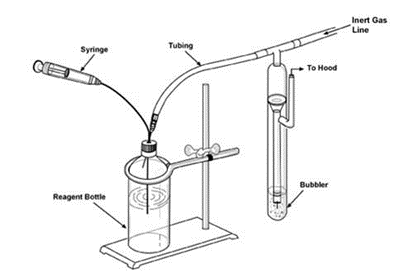
-
- Administrative controls: Well developed SOPs for setting up and using a Schlenk line/syringe transfer assembly as well as SOPs for the acquisition, disposal, general use and storage of Pyrophoric chemicals followed by training of all lab staff on established SOPs. In addition, the PI needs to communicate the hazards involved with pyrophoric chemicals to lab staff and ensure that there are limits to volume and quantity of pyrophoric chemicals. No scaling up, etc.
- PPE: In addition the lab staff would wear fire resistant lab coats, safety glasses and nitrile gloves when working with the chemical.
- Storage:
- Primary container: Crimped top and rubber septum (Ex: Sure Seal) The Sure Seal cap should never be removed.
- Store in a flammable refrigerator.
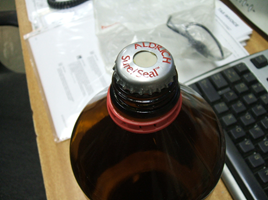
-
-
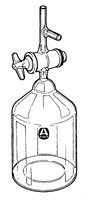
- Secondary container: Storage of pyrophoric materials can be achieved using Teflon or glass stoppered specialty glassware.
- (Credit Storage Bottle without Joints (Sigma-Aldrich, n.d.)
- Secondary container: Storage of pyrophoric materials can be achieved using Teflon or glass stoppered specialty glassware.
- Disposal: Pyrophoric liquids should be bought in quantities that are used during an experiment. In the event that pyrophoric liquids require disposal, contact EHS. All pyrophoric chemicals must be in airtight containers under inert conditions prior to pick up.
-
Hierarchy of hazard controls
When considering how to mitigate hazards, use the following hierarchy of controls. This hierarchy of controls delineates the most effective to the least effective mode of hazard mitigation and each level may be used in conjunction with other levels.
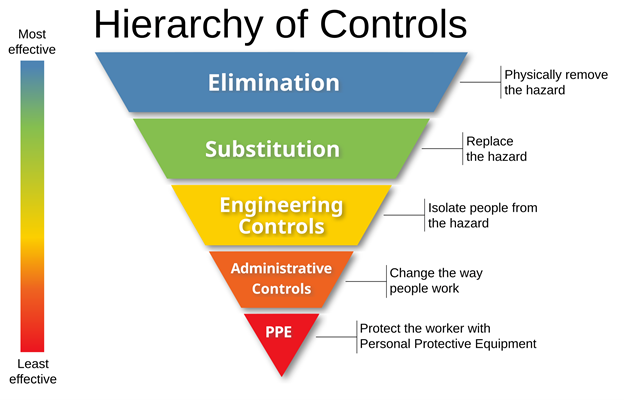
Elimination
The best way to control a hazard is to eliminate it and remove the danger. This can be done by changing a work process in a way that will get rid of a hazard, such as purchasing equipment with updated safety devices that remove the hazard without compromising any laboratory work.
Substitution
The second best way to control a hazard is to exchange a more hazardous chemical for a less- or non-hazardous material. For example, use GelSafeTM as a replacement for ethidium bromide for nucleic acid staining.
Engineering controls
If a hazard cannot be eliminated or a safer substitute cannot be found, use engineering controls to keep the hazard from reaching the worker. This could include methods such as using local exhaust ventilation that captures and carries away the contaminants before they enter the breathing zone of workers (i.e., use of fume hoods and biosafety cabinets). Please note that ductless fume hoods are not approved to be used as a replacement for ducted fume hoods and must be approved by EHS-OHS prior to use. For more information, see the Ductless Fume Hoods section below.
Administrative controls
In addition to engineering controls, or if engineering controls cannot be implemented correctly, administrative controls must be considered. Administrative controls involve provisions relating to organization and management, procedures, record keeping, assessment and reporting necessary to ensure safe operation of a facility. Administrative controls in a laboratory include:
- Ensuring that all personnel have received mandatory training to conduct their work safely;
- Implementing and enforcing SOPs that include safe work practices;
- Reducing time that personnel might be exposed to a specific hazard;
- Restricting access to certain areas and chemicals with high hazards, except for personnel with appropriate training; and
- Enforcing good housekeeping at all times.
Personal protective equipment (PPE)
PPE can control hazards by placing protective equipment directly on workers' bodies. Employees must be trained how to wear each type of PPE properly. When conducting a hazard assessment, PPE must be carefully considered and selected to ensure that all potential routes of exposure are protected.
For example, if gloves are required for work with certain chemicals, the correct type of gloves must be used.
PPE must be used in conjunction with more effective controls or if there are no other more effective ways to control the hazard.
PPE must be provided to employees without charge.
Please see the PPE section of this plan for more specific information regarding types of PPE.
Chemical safety levels
Laboratories at VCU are designated a chemical safety level that is based on the type of research the lab is conducting as well as the volume and types of chemicals being used. Chemical safety levels designate procedures and requirements for the following:
- Lab supervision
- University oversight
- Experiment planning
- Lab attire and minimum PPE standards
- Lab ventilation
- Engineering controls
- Emergency response
Chemical safety levels are designated from 1 to 4 with 1 being the lowest risk labs and 4 being the highest. Chemical safety levels were developed as general guidelines. EHS will conduct risk assessments and suitability reviews to make a determination as to the status of a laboratory’s CSL.
You can view a summary of VCU’s Chemical Safety Levels Category of Controls by clicking on the hyperlink.
These lab designations complement the VCU design and performance requirements with the VCU Minimum Lab Design Specifications (including ASHRAE 62.1, fume hood performance, and LEV requirements).
Personal protective equipment (PPE) and lab attire
PPE can control hazards by placing protective equipment directly on workers' bodies. Employees must be trained how to select and wear each type of PPE properly based on the hazards they are working with. When conducting a hazard assessment, PPE must be carefully considered and selected to ensure that all potential routes of exposure are protected.
For example, if gloves are required for work with certain chemicals, the correct type of gloves must be used.
PPE must be used in conjunction with more effective controls or if there are no other more effective ways to control the hazard.
PPE must be provided to employees without charge.
Lab attire
-
In addition to PPE, it is important for all lab workers to wear clothing that also helps mitigate exposure risk.
-
The "golden rules" of lab dress
-
Full leg coverage: Pants or long skirts should reach the ankles. Shorts, capris and short skirts are high-risk because they leave skin vulnerable to splashes.
-
Closed-toe and closed-heel shoes: Your footwear should be made of a non-porous material (leather or synthetic leather is better than canvas). No sandals, flip-flops or ballet flats.
-
Natural fibers: Whenever possible, wear cotton or wool. Synthetic fabrics (like polyester or nylon) can melt during a fire or react with certain solvents, essentially "shrink-wrapping" a burn to your body.
-
No "dangle" hazards: Secure long hair, remove dangling jewelry and tuck in hoodie strings. These are mechanical hazards that can get caught in equipment or dipped into beakers.
-
-
PPE for body protection
- Use protective clothing as a safeguard against hazardous material spills, splashes, intense heat, impact, cuts and infectious materials. Protective clothing includes:
- Lab coats
- Smocks
- Scrub suits
- Gowns
- Rubber or coated aprons
- Coveralls
- Uniforms
- Pierce-resistant jackets and vests
- Lab coats (or equivalent protective garments) must be worn as minimum PPE whenever entering a laboratory and by all employees working with hazardous materials.
- Flame resistant lab coats are required when handling pyrophoric, air/water reactive materials, open flames and highly flammable liquids.
PPE for eye, face and neck protection
- Safety glasses should be worn when there is risk of minor splash hazards. Safety glasses must have a side shield.
- Safety glasses should be the minimum PPE along with a lab coat when entering a laboratory.
- Safety glasses used in the laboratory must comply with the Standard for Occupational and Educational Eye and Face Protection (Z87.1) established by the American National Standards Institute (ANSI).
- Safety goggles provide a tighter face seal than safety glasses and are worn when working with larger volumes of hazardous material that increases the risk of a larger splash hazard.
- For example, wear goggles when using glassware under reduced or elevated pressure or when using a glass apparatus in combustion or other high-temperature operations.
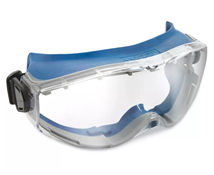
- Laboratory safety goggles must comply with ANSI 787.1 and must have indirect ventilation to avoid splashed chemicals from entering the eye area if a splash occurs. Wood shop goggles do not provide protection as they are directly vented and do not block splashes to the eyes.
- Example of indirectly vented goggles:
- Face and neck protection: Goggles or safety glasses alone do not meet ANSI standards for face and neck protection. For greater protection from flying particles and harmful liquids, wear a face shield in combination with safety glasses or safety goggles to protect the face and throat — critical if your work puts you at risk of hazardous material splashes or flying debris from possible explosions.
- For full protection eye, face and neck protection, wear a pair of safety glasses or goggles in combination with a face shield.
- Consider using a face shield or mask when operating a vacuum system that may implode or conduct a reaction with explosive potential.
- Always use a UV-blocking face shield when working with transilluminators or other devices that produce ultraviolet radiation.
PPE for laboratory foot protection
- Closed toe/heel shoes to protect feet from chemical spills and sharp objects must be worn at all times in a laboratory or technical area.
- Specialized non-slip or chemical resistant shoes may be considered based on risk assessment.
PPE for hand protection
- Wear proper protective gloves for potential contact with hazardous materials, materials of unknown toxicity, sharp-edged objects, and very hot or cold materials.
- Perform a risk assessment before making your selection.
- Select gloves based on the material handled, the particular hazard involved, and their suitability for the operation conducted.
- Chemical protection
- Not every glove is good for every application. The chemical SDS sheets (section 8) will describe the correct material and glove to use for that specific chemical. UC Berkeley has a glove selection compatibility guide that can be referred to as well.
- Common glove materials include neoprene, polyvinyl chloride, nitrile, butyl and natural rubbers (latex). These materials differ in their resistance to various substances.
- Chemicals eventually permeate all glove materials. However, gloves are safe for limited periods if one knows the specific use and glove characteristics, such as thickness and permeation rate and time.
- Consider double gloves (wearing two gloves on each hand) when handling highly toxic or carcinogenic materials.
- Use thicker, chemical appropriate gloves for non-incidental contact and gross contamination.
- For work with liquid pyrophoric chemicals outside of a glove box (fume hood), appropriate hand protection must include chemically resistant outer gloves (neoprene gloves) on top of an approved flame resistant (FR) inner glove or glove liner (Kevlar Liner gloves).
- Never reuse disposable gloves.
- Not every glove is good for every application. The chemical SDS sheets (section 8) will describe the correct material and glove to use for that specific chemical. UC Berkeley has a glove selection compatibility guide that can be referred to as well.
- Sharps hazards protection (broken glass, needles, scalpels, microtomes)
- Wear sturdier gloves such as leather for handling broken glassware, inserting glass tubes into rubber stoppers, and similar operations where you do not need protection from chemicals.
- Consider wearing puncture resistant gloves when handling needles or scalpel blades (i.e., when cleaning cryostats or microtomes)
- Cryogens protection
-
- Use gloves specifically designed for work with cryogens.
- Do not wear woven gloves while working with cryogens as the liquid may work its way through the glove to your hand.
- Gloves worn for working with elevated temperatures may not be appropriate for working with extremely low-temperature liquids.
- Heat protection
- Wear thermal rated gloves when handling very hot material or glassware.
- If flame-resistant gloves compromise dexterity due to the nature of the work, contact the Lab Safety Office (804) 828-1392 or email at labsafety@vcu.edu for guidance.
PPE selection for hearing protection
- A variety of hearing protection is offered, including earplugs and earmuffs, and are required to be made available for employees whose workplace reaches critical noise levels, ~85dBA for an eith hour work day.
- Situations, where employees are routinely exposed to elevated noise levels, must be evaluated by the VCU Industrial Hygienist. For more information visit the OHS Hearing Conservation website.
Other criteria for selecting lab clothing
- Wear liquid-resistant fabric or coatings when spills or splashes are anticipated.
- Non-disposable garments must be capable of withstanding sterilization in case they become contaminated.
- Consider closure types and location for ease of use.
- Consider antistatic properties.
PPE for respiratory protection
- All respirator use, including powered air purifying respirators and filtering face-piece respirators (i.e., dusk masks or disposables such as N95s) require approval by OHS before use by faculty, staff and students.
- Respiratory protection should only be used when effective engineering controls such as a fume hood or a bio-safety cabinet are not available to minimize inhalation exposure to chemical gasses, vapors or particulates.
- Jobs that may require respiratory protection or voluntary use of respiratory protection must be evaluated by the industrial hygienist and occupational safety team. More information on evaluation for respiratory protection, including requesting assessments, can be found at the OHS Respiratory Protection website.
Prevent the spread of contaminants
- Remove all PPE before leaving the laboratory.
- Never wear lab coats, gloves, coveralls or other potentially contaminated PPE to public locations such as cafeterias, restrooms, elevators, offices or other off-site areas.
- Clean and store PPE as in your SOP and and/or according to manufacturer's instructions.
- Always wash your hands after removing PPE and before leaving the work area.
- Do not reuse disposable gloves.
- Have lab coats and coveralls laundered regularly by a designated vendor. Contact EHS
- Do not take contaminated clothing home or to any other undesignated site for laundering.
Laboratory safety training
In laboratory settings, PIs and safety compliance liaisons must make sure that all employees and students who use hazardous chemicals complete the necessary training. University required training in Scishield and lab specific training must be completed for all lab workers. Upon completion of all laboratory-specific training, documentation of the training must be retained for verification and review. Annual refresher training in the lab should include new and/or different laboratory procedures as needed.
SciShield laboratory safety training
The SciShield Course Directory provides various online safety modules that are targeted at training laboratory staff on hazards they might encounter at VCU. These training modules provide a general understanding of chemical safety in the laboratory but do not replace or substitute for laboratory-specific training. Some of these training modules are mandatory while others are highly recommended for specific job activities.
Other mandatory training may be required for your laboratory if your lab works with biohazards, radioactive materials, shipping of dangerous or hazardous materials, or lasers.
SciShield laboratory training modules cover the following topics:
- Review of general laboratory safety practices and regulatory requirements
- Recognition of laboratory hazards
- Types of engineering controls and PPE
- Signs and symptoms associated with exposures to hazardous chemicals
- Procedures for disposing of hazardous chemical waste
- Fire safety and emergency procedures
- Conducting risk assessments
- Physical and ergonomic hazards
- Working with pyrophoric chemicals
All employees and students working in VCU laboratories must take the following laboratory safety course provided on Scishield:
- Fundamentals of laboratory safety that provides a general overview on laboratory safety for laboratory workers.
Additionally, lab members may be required to take additional safety training based on their job activities in the lab:
- Principal investigators responsibilities is a yearly requirement for all principal investigators and is designed to give the PI the foundation needed to create a strong safety culture in the laboratory.
- Hazardous waste management in laboratories that trains laboratory workers on specific requirements for establishing and maintaining a satellite accumulation area for hazardous (chemical) waste created in the laboratory as part of laboratory experimental procedures.
Non-mandatory but highly recommended lab safety training modules offered through SciShield.
- Working safely with autoclaves provides personnel with a general overview on autoclave use and safety at VCU. Completion of this online training is recommended for all personnel who use or plan to use autoclaves at VCU.
- Managing pyrophorics compounds covers the safe use of pyrophoric chemicals which are a hazardous class of chemicals that can spontaneously ignite in open air. In order to work safely with pyrophoric chemicals special procedures/precautions, engineering controls and PPE are required. This training will provide the user with general handling techniques when working with pyrophoric chemicals. This training is a general training and must be complemented with your laboratory's specific training requirements that are based on the type and quantity of pyrophoric chemicals and the type of experiment being conducted. The course meets the requirements of the Chemical Hazard Communication Regulations (Federal OSHA 29 CFR 1910.1200) and Laboratory Standards (OSHA, 29 CFR 1910.1450).
Laboratory specific training
PIs and laboratory supervisors must also provide training specific to their operations. Topics that require specific training include:
- How to find the university chemical hygiene plan, SSDs, SciShield and other regulatory information
- Review of lab specific emergency procedures, including shutdown procedures, location of emergency equipment and exit routes (see the Emergency Response and Spill Cleanup section of this plan); a copy of a fillable laboratory Emergency Procedure Template is available from EHS here.
- Use of engineering controls, administrative controls and PPE
- How to use specialized equipment
- Protocol or safety SOPs
- Review of reference materials (e.g., SDSs) on hazards, handling, storage and disposal of hazardous chemicals
- Specialized procedures and protocols
- High hazard protocols, including physical and health hazards, potential exposure, medical surveillance and emergency procedures
- VCU requires each person working in a laboratory or technical area receives a one-time site specific orientation
- Laboratory-directed training is required on a regular basis to promote a strong safety culture
Documentation of training
Accurate record-keeping is a critical component of health and safety training. EHS-OHS maintains records of all safety training that is provided through SciShield. Departments or laboratories are responsible for documenting all other health and safety training, including safety meetings, one-on-one training and any third-party in-class or online training. PIs or lab managers are responsible for locating or keeping all training records for their staff. Training documentation can be managed through SciShield or by downloading electronic training certificates and keeping them digitally or in paper form. For lab-directed training include a sign-in sheet with details such as date, topics discussed and who leads the training. PIs and laboratory supervisors can review training histories for EHS-OHS taught training or online courses taken through SciShield by clicking the training tab. For questions, email vcubioraft@vcu.edu.
Chemical management and inventory
Chemical inventory
A current inventory of all potentially hazardous chemicals must be maintained for every chemical stored, used or produced within each laboratory. The laboratory chemical inventory should be updated annually, or more often if warranted. All VCU laboratories must maintain their chemical inventories using the SciShield inventory management system, ChemTracker. Additionally, all laboratories must complete a chemical reconciliation of their chemical inventory at least annually. A chemical reconciliation how-to document is available from EHS upon request. If you need assistance with completing your lab’s chemical inventory reconciliation, please contact our Laboratory Safety team.
Chemical labeling
The OSHA Hazard Communication Standard and the OSHA Lab Safety Standard require:
- The classification of chemical hazards;
- Labeling provisions that include requirements for use of standardized signal words, pictograms, hazard statements and precautionary statements;
- SDSs (formerly material safety data sheets)
More information on the hazard communication standard, including the link to the Federal Register notice, can be found on OSHA's hazard communication safety and health topics page at www.osha.gov/dsg/hazcom/index.html
Chemical container labeling system
The OSHA Hazard Communication Standard (29 CFR 1910.1200) is the labelling system that must be used in laboratories for both primary and secondary containers.
- All primary containers must be labeled. Labels must, at a minimum, state the chemical name (as it appears on the SDS and chemical inventory), the manufacturer, importer, or supplier name and contact information, and the chemicals' hazard information. Existing labels on incoming containers must not be removed or defaced unless the container is immediately marked with the required information.
- Secondary or "transfer" containers must be labeled if the chemical will not be used within one work shift or if the container will not be constantly attended to and under the user’s immediate supervision. Always label secondary storage containers. This will eliminate confusion where there are more than one unlabeled containers in use, and will ensure that container content is known in the event of an emergency where outside personnel may be involved.
- Secondary container labeling must include the following:
- The name of the substance (full name or names of the chemicals in a solution with percentages)
- Date created
- All hazard warnings, like the original container(s).
- Example: Flammable, corrosive, toxic, reactive
- Labels for secondary containers must be a separate new label with all required information and cannot be written directly on the container. Please contact Laboratory Safety if you need fillable labels for secondary containers.
- NOTE: Any unlabelled or unknown chemicals will not be picked up for disposal by EHS unless a cost code is provided by the laboratory.
General chemical storage guidelines
Chemicals must be stored in a defined storage area (safety cabinet for flammables or in an approved room or on segregated shelves). Avoid storing chemicals on laboratory bench tops or in fume hoods. Certain highly toxic materials that must be stored in a fume hood or glove box (e.g., HCl gas) are the exception. All chemicals must be stored according to their hazard classification. The PI or safety compliance liaison should delineate storage areas within the laboratory that can be segregated according to hazard class. Store chemicals in the lab by:
- Safely spacing shelves and racks to accommodate the upright removal of the largest chemical container; prevent tipping and dripping with adequate clearance.
- Keeping hazardous materials away from heat and direct sunlight to prevent the degradation of chemicals and deterioration of storage containers and labels.
- Not storing hazardous materials (except cleaners) under sinks.
- Avoiding chemical stockpiling; procure hazardous chemicals as needed.
- Limiting storage of hazardous materials in fume hoods, which could compromise air flow.
- Conducting periodic cleanouts to minimize accumulation of old or unused chemicals.
- Not bringing food (including gum), beverages, tobacco and open cosmetics into the laboratory.
- Storing hazardous and especially corrosive chemicals below the average range of eye-level.
- Keeping track of the location of each chemical in the chemical inventory list.
Chemical hazard classifications
- Corrosives
- Acids: Have a pH from one to seven. They are corrosive (“burn” skin); have a sour taste (e.g., lemons or vinegar); contain hydrogen ions (H+); and when dissolved in water, they turn blue litmus paper to a red color. Examples include: hydrochloric, sulfuric and acetic acids.
- Bases: Have a pH from 7 to 14. They are corrosive ('burn' skin); have a soapy feel and turn red litmus paper to a blue color. Examples include: sodium hydroxide, bleach and ammonium hydroxide.
- Carcinogens: A substance or agent that can cause cells to become cancerous by altering their genetic structure so that they multiply continuously and become malignant. Asbestos, DDT and tobacco smoke are examples of carcinogens.
- Oxidizers: Oxidizers react with other chemicals by giving off electrons and undergoing reduction. Uncontrolled reactions of oxidizers may result in a fire or an explosion, causing severe property damage or personal injury.
- Pyrophorics: Pyrophoric liquids, solids and gasses are materials that may ignite or react violently when exposed to air. Many pyrophoric chemicals are also water reactive. Examples include white phosphorus and metal hydrides, such as sodium hydride.
- Toxins: Include heavy metal compounds such as: arsenic, barium, cadmium, chromium, lead, mercury, silver, selenium, etc. Pesticides such as, Aldrin, arsenic pentoxide, arsenic trioxide, cacodylic acid, chlordane, copper cyanides, Dieldrin, dimethylcarbamoyl chloride, Endrin, Lindane, pentachlorophenol, strychnine, etc.
- Flammable and combustible liquids
- Store flammable and combustible liquids away from oxidizers and heat producers
- House flammable and combustible liquids in excess of 25 gallons (per room) in approved flammable storage cabinets (under the hood or stand-alone) and limit liquids in secondary containers (i.e., squeeze bottles) to ten gallons or less.
- Use only flammable and/or explosive storage approved and well-labeled refrigerators and freezers for storing flammable liquids. Never store food or drink with chemicals or flammables.
- Proper grounding and bonding is required for transferring Class 1A flammable liquids (examples: Diethyl Ether, Heptane, Methyl Chloride) out of any type of container that is greater than one gallon (four liters) or larger into a container of any other type and size. Grounding and bonding for all other flammable material is recommended, and transfer of any flammable or toxic chemicals must be done inside of acceptable engineering controls for safe ventilation, such as a ducted fume hood.
Entrance door signage indicating chemical and other hazards
The entrance door to each laboratory should be labeled with a safety sign. The sign should be updated whenever the contact information and/or the hazard levels of designations change. A single sign should be utilized for each room and/or laboratory area. The hazard information should reflect the conditions unique to that space. Visit the Laboratory Safety Signage page for more information.
Ordering chemicals
Departments or PIs can order chemicals. Before purchasing a chemical, the PI, safety compliance liaison or laboratory staff should consider the following:
- The minimum quantity that is sufficient for current use.
- Bulk purchases are not necessarily cheaper. Due to storage requirements and fire code maximum allowable quantities restrictions.
- High hazard chemicals
- Please note that the purchase of high hazard chemicals as defined by this plan, require review and approval by EHS prior to purchasing or storing. For more information refer to the “High Hazard Chemical Work in Laboratories” section.
- Compressed gas cylinders
- Including lecture bottles, should normally be purchased from suppliers who accept return of empty cylinders.
- Maximum allowable quantities (MAQ)
- Fire codes regulate quantities of flammable and combustible chemicals for each building on campus. For these materials, a maximum allowable quantity for laboratory storage should be established according to the building code.
- All flammable chemicals must be properly stored in an appropriate flammable safety cabinet at all times.
- EHS will conduct MAQ assessments periodically in research buildings and will advise the research laboratories accordingly.
- Unstable chemicals
- Consider whether the chemical is unstable.
- Inherently unstable materials may have very short storage times and should be purchased just before use to avoid losing a reagent and creating an unnecessary waste of material and time.
- Disposal
- Make sure the waste can be managed satisfactorily. Identify a method for proper waste disposal before the chemical is ordered.
- SDS
- A purchase order for a chemical should include a request for a SDS if the chemical is new to the lab or the SDS has been updated by the manufacturer.
- Many chemical suppliers send a SDS only with the initial order of a chemical. Subsequent orders of the same chemical are not normally accompanied by a SDS.
Receiving chemicals
- Chemical deliveries should be limited to areas equipped to handle them, usually a loading dock, receiving room or the laboratory where the chemical will be used and/or stored. Carts designed to move various types of chemical containers, including gas cylinders, should be used to ensure safe relocation.
- Personnel receiving chemicals classified as dangerous goods by either the U.S. Department of Transportation or International Air Transport Association at a receiving loading dock or facility, must be trained and certified to do so. OHS provides training and certification for personnel performing this task. Information for dangerous goods training can be found here.
- After registering for and taking the course, individuals must take and pass the dangerous goods test, which will be facilitated by the instructor of the course. Incoming packages should be promptly opened by trained/certified personnel and inspected to ensure containers are in good condition. Unpacked chemicals should be stored safely. Periodic inspections of storage areas also should be done so that leaks from damaged containers are contained as soon as possible.
- Transportation of chemicals within the department must be done safely. Single boxes of chemicals in their original packaging can be hand carried to their destination if they are not too heavy. If a cart is necessary, it must come equipped with a tray and secondary containment must be used. Appropriate PPE must be worn at all times when handling or transferring chemical containers. Transfer of any hazardous chemical containers from one campus to another is not permitted via personal vehicle (motorized or non-motorized) or public transportation. Please contact the Laboratory Safety team for guidance if you plan to transport any hazardous material between campuses.
- Cylinders of compressed gasses should always be secured on specially designed carts and never be dragged or rolled. The cap or regulator should always be securely in place.
- When packages are opened in the laboratory, laboratory personnel should verify that the container is intact and is labeled, at a minimum, with an accurate name on a well-adhered label. Labels placed by the manufacturer should remain intact. New chemicals should be entered into the laboratory's inventory promptly and moved to the appropriate storage area. Chemical containers are not permitted to be stored on the floor at any time.
Management of peroxide forming chemicals (PFCs)
Certain chemicals become unstable through processing (like distillation) or prolonged exposure to air and light. These substances can develop explosive peroxide crystals, posing a severe risk to laboratory personnel and waste handlers. Improper management of peroxide-formers often results in exorbitant disposal fees, property damage or fatal laboratory accidents.
Peroxide-forming chemicals are usually categorized by how readily they form explosive compounds.
A list of categories and chemicals that are routinely found in laboratories can be found here.
Isopropyl alcohol (2-Propanol) has recently been added as a chemical of concern to manage as a peroxide-forming chemical (typically the distilled product can readily form explosive peroxides, but stored isopropyl alcohol should be evaluated based on container and storage conditions).
Best practices for management of PFCs include:
- Review the SDS for each chemical before purchase and use it to make sure that the necessary safety protocols are in place and there is a proper space to appropriately store items.
- Only purchase the amount necessary for experiments, and be mindful of the recommended shelf life for the chemicals. Avoid purchasing in bulk quantities for lower costs, as the cost to properly dispose of unused chemicals will cost more long term.
- Always write the date received and date opened on the chemical container that is a possible peroxide former.
- Add any new containers to the laboratory chemical inventory on Chemtracker via SciShield. Note that ChemTracker enables the ability to search for hazard types in the laboratory’s chemical inventory, including the category of “Unstable with age” that will include possible peroxide-forming chemicals.
- Store peroxide formers in a dedicated, dry, dark, well-ventilated area away from incompatible materials. Keep containers tightly sealed when not in use. Avoid exposing peroxide formers to direct sunlight and extreme temperatures. Do not store peroxide formers for longer than the recommended shelf life.
- Regularly check for signs of peroxide formation, such as crystalline residues or pressure buildup. If such physical changes are found, do not handle the container and contact EHS for assistance. Wear appropriate PPE including safety goggles, lab coats and gloves when handling peroxide formers. Minimize exposure to air by working quickly and efficiently when handling these chemicals. Use only approved tools and equipment.
- All personnel working with peroxide formers must receive proper training in the safe handling and storage of these chemicals. The PI is responsible for creating and updating lab specific SOPs for all PFCs.
- Regularly check your chemical inventory for all PFCs and submit a hazardous waste disposal request for all unwanted or expired chemicals.
- Testing for peroxides:
- After one year of the open date, or over five years of the received date if unopened.
- Tests must be done using appropriate testing methods
- The date of the testing method must be written on the container.
- Contact EHS for proper disposal and handling instructions.
- Do not handle any containers that appear to be cloudy or have visible peroxide formation on or inside the container.
- Please note that any PFC with an unsafe level of peroxide formation will need to be assessed and handled by a designated hazardous waste vendor, which will require additional costs that the lab or department must pay.
- Maintain records of the purchase, storage, testing and disposal of peroxide formers.
Chemicals classified as controlled substances by the U.S. Drug Enforcement Administration (DEA) and Virginia Board of Pharmacy
These chemicals are subject to additional regulation and control measures. Any laboratory using or supplying chemicals appearing on DEA’s List I or List II Regulated Chemicals must comply with all federal and state regulations.
The VCU Office of the Vice President for Research and Innovation outlines the procedures and requirements for these chemical types in the Using Controlled Substances for Research policy and in the Use of Controlled Substances in Research Manual.
Also please see requirements on the OVPRI website for Research Use of Controlled Substances.
Waste management
VCU handles and manages hazardous waste in accordance with the Resource Conservation and Recovery Act and commonwealth of Virginia regulations.
Any waste material generated by VCU must be recycled, treated, stored or disposed of at an authorized waste facility. Hazardous waste cannot be disposed of down the sink, in the trash, or in or on the ground.
VCU properly disposes of its hazardous waste through a permitted treatment, storage and disposal facility.
All generators of laboratory chemical waste must take the Hazardous Waste in Laboratories training module in SciShield on a yearly basis.
NOTE: Unknown or unlabelled chemicals will no longer be picked up by EHS unless a cost code is provided by the laboratory or department.
Waste appointments
Read more about Hazardous Chemical Waste Pick Up Procedures.
Complete the Chemical Hazardous Waste Pick up Request form to schedule your pickup.
- Chemical waste is the responsibility of the laboratory.
- Any lab members that produce or manage hazardous waste are required to complete annual Chemical Waste Management in Labs training through SciShield.
- Labs must have written SOPs that define the types and amounts of waste the lab produces, and how this waste will be properly disposed of. Labs must also include written protocols that describe how to manage chemical inventory prudently that will reduce waste and limit unused, unwanted or expired chemical inventory.
- Chemical waste shall be stored in accordance with state and federal laws, and labs must request pick-up of hazardous waste as often as needed. If a lab requires regular weekly pick-ups, please contact the Chemical Waste pick-up team for assistance.
- Chemical waste containers will only be collected by the Hazardous Waste pick-up team if all requirements are met (properly labeled, secure cap, container is no more than two-thirds full, container is not leaking or compromised). The Hazardous Waste pick-up team reserves the right to refuse pick-up if a waste container violates these requirements, and it is the responsibility of the lab to correct any violations that prevent a safe pick-up.
- Unknown chemicals will not be picked up by the Hazardous Waste pick-up team. If a lab has an unknown chemical for disposal, they must contact the laboratory safety team and a pick-up will be scheduled through a third-party vendor at cost to the PI or department. It is the responsibility of each lab to properly label all chemical containers and waste containers at all times.
- Chemical containers for disposal that are deemed to be high hazard, including expired peroxide forming chemicals, or for larger lab cleanouts, may require a pick-up to be scheduled through a third-party vendor at cost to the lab or department. Please contact the laboratory safety team for assistance.
Resources
SOPs development
An SOP is a written document explaining how to safely work with all specific laboratory hazards. SOPs are necessary to meet not only federal or state regulatory requirements, but also provide readily available guidance to workers as they perform laboratory tasks as well as act as a training tool. SOPs are required elements of the CHP and are written using the completed hazard assessment form as a prompt to assure safe working practices designed to prevent injuries and illnesses.
Examples of commonly used methods for organizing the content of SOPs are:
- Processes (distillation, synthesis, chromatography, etc.)
- Individual hazardous chemicals (arsenic, benzene, hydrochloric acid, etc.)
- Hazardous chemical class (flammable, corrosive, oxidizer, etc.)
- Laboratory equipment
Each SOP can be used for chemical, biological, mechanical, or as “other” if an SOP cannot be classified under the other three categories. Create SOPs for all laboratory functions and include safety components for each step of an experiment to comply with all safety requirements (e.g. PPE requirements or the use of fume hoods and/or other engineering controls.) For example, Xylene can be used in many ways. Structure the SOP so that the procedures ensure the safe use of Xylene in every application at a specific laboratory.
Resources
Safety data sheets
Chemical manufacturers and importers must evaluate their materials to determine if they are hazardous. If they are considered to be hazardous, a SDS must be prepared and sent to end users. These were formerly referred to as material safety data sheets (MSDSs). The end user must have access to the information and know the hazards prior to working with the substance.
- Each department or work area must maintain a SDS for each hazardous chemical or material in use. This may be done in SciShield.
- The SDSs may be filed and maintained electronically and/or as hard copies as long as they are readily available to all personnel during the work shift. If SDSs will be stored electronically or on the Internet, a computer should be available to lab personnel at all times. If using SciShield they can be accessed through the cloud on cell phones, tablets or laptops.
- The ChemTracker chemical inventory system in SciShield has the ability to link to available online SDSs for several common manufacturers and vendors. It is the responsibility of the lab to verify that an SDS is readily available for each hazardous chemical in the lab, including if the lab is utilizing the SDSs linked in the ChemTracker module. If the lab is unable to find a hazardous chemical listed in ChemTracker, or its correct SDS, please contact the lab safety team for assistance.
Emergency responses and spill clean up
Development of laboratory emergency response procedures
Each laboratory should have an established laboratory specific emergency response procedure. The PI or safety compliance liaison should make sure all personnel receive training on how to respond to small spills and how to evacuate the work area in the event of a major chemical spill, fire, water main break or other non-routine emergency event. All laboratory personnel should know how to use more than one exit to evacuate the building. Contact EHS-OHS at 828-1392 for guidance.
A copy of the Laboratory Specific Emergency Response Procedure template can be downloaded here: Laboratory-Specific Emergency Response Procedures.
Medical emergencies
In the event of an life threatening emergency DIAL 911
- Other VCU emergency numbers
- VCU Police: 828-1234
- VCU EHS Emergency line: 828-9834
- VCU Facilities Emergency line: 828-9444
Chemical exposures or injuries
In the event of an exposure or lab injury, apply immediate first aid if required. If medical help is required, the injured person must be accompanied to either Employee/Student Health Services or the emergency room. Always bring a copy of the SDS with you.
Chemical exposures
Always review the SDSs for specific exposure procedures.
- Eye exposure: Flush the eyes for 15 minutes with an ANSI compliant eyewash.
- Skin exposure/needlestick: Wash affected areas with soap and water.
- Ingestion/inhalation: Contact the Virginia Poison Control Center and follow the SDS instructions.
- Virginia Poison Control Center: (800) 222-1222
After initial first aid, chemical exposures should always be followed up by a health professional, even if the exposure seems to be minor.
Report any injuries or exposures using the VCU Injury/Accident reporting portal
Spill response guidelines
If handled properly, a spill may be nothing more than a nuisance. If handled improperly, a spill can seriously disrupt your activities and the work of your colleagues. At worst, a spill can cause bodily harm or property damage. In most cases, laboratory spills involve small quantities of materials, and if precautions are taken, such a spill will present minimal hazards. Laboratory personnel are usually the most appropriate people to clean up the spills because they are more likely than others to be familiar with the spilled material's hazardous characteristics and can respond quickly. If personnel are not sure about whether or not a spill can be cleaned up safely, call for assistance immediately.
Emergency preparedness
Please see our Chemical Spill Response website for more information.
Prepare for spills
- Learn about the hazards of the chemicals in the laboratory,
- Write response procedures to address those hazards, and
- Make sure that you have the equipment and training necessary to follow those procedures.
Know the hazards
As an integral part of any laboratory work, hazardous or potentially hazardous properties of all chemicals used or produced in your laboratory must be identified. Ask EHS if you require assistance.
Write spill response procedures
Every laboratory should develop written spill response procedures. Such procedures should detail the initial steps to take when a spill occurs and include such elements as staff responsibilities, communication methods, instructions on using spill response equipment, and spill cleanup and residue disposal. Communicate these procedures to all individuals who use chemicals or who might assist during spill cleanup. Periodically review and update these procedures as necessary. As SOPs are updated, communicate the changes to laboratory workers. The SOP template has a section for the writer to detail specific spill procedures and/or processes for the worker to follow.
Make materials and equipment available
Before starting any work, verify that all necessary safety equipment and spill cleanup materials are available and in good working order. Additionally, make sure that the individuals who may be involved in spill response are properly trained in equipment use and spill cleanup procedures. Finally, regularly inspect all materials and equipment to ensure they will function properly when needed.
Communication and determination for when a spill occurs
- Whenever a chemical spill or release is discovered, the safety compliance liaison and/or laboratory personnel should notify the PI or EHS-OHS.
- When a spill occurs, determine the appropriate response. There are two types of spills:
- Simple spills, which you can clean up yourself. A simple spill does not spread rapidly, does not endanger people or property except by direct contact, and does not endanger the environment.
- Complex spills, which require outside assistance.
- Determine whether a spill is simple or complex by:
- Evaluating the spill's risks;
- Evaluating quantities; and
- Evaluating the spill's potential impact.
- To determine whether a spill is simple or complex (which is often the hardest part of spill response), you need to know (1) whether the hazard(s) posed by the spilled chemical and (2) the spill's potential impact. Both these factors are, in large part, determined by the spill's size. Determine whether you have a simple spill by:
- Type of chemical(s) spilled
- Quantity
- Hazardous characteristics of the spilled chemical(s)
- Location
- Proper method for cleaning up the spill
- PPE available, and the training of the laboratory’s personnel
For larger or more hazardous spills, immediately call EHS at (804) 828-1392 for assistance. For after-hours emergencies, call (804) 828-9834.
Recommended procedures for cleaning up simple spills
Steps for a spill cleanup:
- Prevent the spread of dust and vapors.
- Neutralize acids and bases, if possible. Neutralize acids with soda ash or sodium bicarbonate. Bases can be neutralized with citric acid or ascorbic acid. The use of pH paper (if available) can determine whether acid or base spills have been neutralized.
- Control the spread of the liquid. Contain the spill. Make a dike around the outside edges of the spill. Use absorbent materials such as vermiculite, cat litter or spill pads/pillows.
- Absorb the liquid. Add absorbents to the spill, working from the spill's outer edges toward the center. Absorbent materials, such as cat litter or vermiculite work well, but are messy. Spill pillows/pads are not as messy as other absorbents, but they are more expensive.
- Collect and contain the cleanup residues. The neutralized spill residue or the absorbent should be scooped, swept or otherwise placed into a plastic bucket or other container. For dry powders or liquids absorbed to dryness, double bag the residue using plastic bags.
- Dispose of the wastes. Keep cleanup materials separate from normal trash. Contact EHS-OHS for guidance in packaging and labeling cleanup residues. If clean-up materials need to be removed from the spill site as soon as possible, call EHS-OHS.
- Decontaminate the area and affected equipment. Ventilating the spill area may be necessary. Open windows or use a fan.
Special precautions
The following precautions apply to chemicals that have hazardous characteristics. Note that some chemicals may exhibit more than one characteristic.
- Flammable liquids: Remove all potential sources of ignition. Vapors are what actually burn. Typically, vapors are heavier than air and accumulate near the floor. Flammable liquids are best removed through the use of spill pillows or pads. Spill pads backed with a vapor barrier are available from most safety supply companies. Because flammable liquids will probably be incinerated, avoid using inert absorbents such as cat litter.
- Volatile toxic compounds: Open fume hoods to increase air exhaust. If safe to do so, use appropriate absorbent material to control the extent of the spill. Spill pads/pillows or similar absorbents usually work best because they do not have the dust associated with cat litter or vermiculite.
- Direct contact hazards: Carefully select suitable PPE. Make sure all skin surfaces are covered and that the gloves you use protect against the hazards posed by the spilled chemical. When the cleanup is completed, be sure to wash hands and other potentially affected skin surfaces.
Mercury spills and mercury thermometers
- Mercury spills rarely present an imminent hazard unless the spill occurs in an area with poor ventilation. The main exposure route of mercury is via vapor inhalation. Consequently, if metallic mercury is not cleaned up adequately, the tiny droplets remaining in surface cracks and crevices may yield toxic vapors for years.
- When a mercury spill occurs, first isolate the spill to prevent people from tracking the contamination to uncontaminated areas. A special mercury vacuum cleaner will provide the best method of mercury spill cleanup. Do not use a regular vacuum cleaner. Call EHS-OHS at 828-1392 for assistance. EHS-OHS has a special mercury vacuum designed for clean-ups.
- The purchase, use and storage of mercury thermometers is prohibited. If you find a mercury thermometer in the laboratory, please contact EHS-OHS for directions on proper disposal.
Documentation
After cleaning up a spill, a simple write-up should be prepared to document what happened, why, what was done and what was learned. This can be used to avoid similar instances in the future.
- Worker safety and training: All personnel entering a laboratory must be trained (or be accompanied by a trained person) about the laboratory's chemical risks and the actions to be taken during an emergency. Personnel who clean up their own spills must be trained according to their laboratory's CHP. Personnel who go into other work areas to assist with spills must be documented as having had additional special training.
- Disposal of spill cleanup materials: Clean-up materials from hazardous substance spills are regulated as hazardous waste. Follow VCU's guidelines for packaging, labeling and disposing of these materials.
Spill prevention methods
Laboratory spills can occur during a chemical's storage, transportation or transfer as well as during an experiment. A spill prevention program for storage areas should include the following:
- Sturdy shelves and properly designed storage areas to minimize breakage and tipping
- Hazardous chemicals stored on shelves or in cabinets over work bench areas must be placed at or below eye level, and at least six inches away from edges if there is no lip on the end.
- Containers stored by hazard class. Store larger containers close to the floor
- Store containers on shelves away from the shelf edge to minimize the danger of falling
- Storage shelves with lips to reduce the danger of falling
- Regularly inspect the integrity of containers
- Secondary containment (e.g., placing a sturdy plastic container under primary waste receptacles to contain possible overflow)
- To minimize spills during transport:
- Use transport carts when appropriate
- Use safety containers (i.e., use a metal container for flammables)
- Use rubberized buckets
- Straps to secure containers
- Make sure laboratory personnel are properly trained and conscientious regarding safe practices
- For the transfer of liquids from one container to another, the risk of spills can be reduced by:
- Paying careful attention to the size of containers to avoid overfilling
- Using pumps or other mechanical devices rather than simply pouring directly into a container
- Providing spill containment to capture any leaks
- Bonding and grounding containers when flammable liquids are involved
- Damaged equipment should be reported to the PI and VCU Facilities Management
- Be vigilant of conditions in the laboratory by:
- Reducing clutter and unnecessary materials
- Eliminating tripping hazards and other obstructions
- Having all needed equipment readily available before starting work.
Dress code in teaching labs
Safety glasses and goggles
Safety glasses must be worn in the laboratory at all times. There are NO exceptions. Chemical splash goggles may be worn but are not required in teaching labs where chemical splashes are less common.
Laboratory clothing and footwear
- Wear clothing that covers the body from the neck to the ankles, shoulders and feet.
- Shirts (tops) which cover shoulders and underarms completely, as well as the back and entire abdominal area when standing, sitting or reaching.
- Pants and skirts must reach the ankle when standing or sitting. Skin should not be exposed between the bottom of the pants and top of the footwear, nor anywhere else except on the neck, and lower parts of arms. Clothing with holes that leave skin exposed are not allowed.
- Shoes must cover the entire foot. Footwear with open toes, open heels or other decorative openings are not allowed in the lab.
Contact lenses
Individuals who wear contact lenses are encouraged to wear glasses (under their chemical splash goggles) in the laboratory.
Hair
Hair longer than shoulder length must be tied back or constrained in such a way that there is no risk of it making contact with potential hazards. Rubber bands should be available in the laboratory.
Food and beverage
Food and beverages (including gum) are not allowed in the laboratory.
Headphones
Headphones are not permitted to be worn in teaching laboratories.
Ductless fume hoods
The use of ductless fume hoods in any setting at VCU is generally prohibited. EHS-OHS must approve and review all ductless fume hoods on a limited basis, prior to being purchased and installed. Prior approval from EHS-OHS for use of ductless fume hoods requires the following information, which shall be reviewed during the annual laboratory safety inspection:
- A Facility Suitability Assessment form for review and approval by EHS-OHS must be completed. The assessment request form can be found here.
- Registration of equipment on the laboratory’s equipment inventory on SciShield.
- All fume hoods must be certified annually by an independent vendor.
- Dates of filter changes must be posted on the outside of the unit along with the type of each filter. Please note that used filters are typically considered to be hazardous, and must be handled safely with proper PPE per manufacturer guidelines.
- A comprehensive list of chemicals permitted to be used in the fume hood, to include chemicals, amounts and over what time period, must be posted visibly on the hood. Any change in use that deviates from prior EHS-OHS approval must be reviewed by EHS-OHS before changes take place.
Volunteers and minors
Volunteering and shadowing opportunities at VCU represents a highly valuable experience for our university community. To ensure a safe and compliant environment, supervisors and sponsors must visit the Human Resources Volunteer Page and adhere to the mandatory onboarding protocols, especially when volunteers will be exposed to hazardous materials in university areas. Like other staff members, volunteers must undergo comprehensive safety training relevant to the potential hazards encountered while shadowing. This includes an annual review and adherence to the CHP.
To facilitate access to crucial health and safety information, the PI or supervisor must add volunteers to the laboratory’s SciShield profile. This inclusion guarantees that volunteers have access to critical documents such as SDS and SOPs.
Volunteers are prohibited from entering the lab unsupervised. A lab supervisor, manager or their designee (an employee assigned to the laboratory) must be present during all volunteer activities, ensuring the safety of both volunteers and the laboratory environment.
Minors
All programs or activities sponsored and hosted involving minors must register with the Protection of Minors Office and adhere to the onboarding requirements outlined on the Human Resources Volunteer Page. No persons under the age of 18 years old shall be permitted to be present in any laboratory setting for any reason without prior approval. The employee interested in bringing a minor to volunteer must achieve full compliance with the safety and protection of minors policy prior to the start of any volunteer opportunities.
OHS has the following additional limitations on minors in hazardous locations or programs involving hazards:
Age based limitations
- Persons under 12 years of age are prohibited from entering laboratories.
- Persons aged 12-15 may not enter a laboratory or participate in educational research or clinical activities, unless the activity is an approved children and youth program.
Additional requirements based on hazards
Minors aged 16 or 17 who are engaged in research/clinical activities may not work with any of the following materials:
- Biological materials (see VCU’s Biosafety Manual for more information)
- HHS and USDA listed select agents and toxins
- Human pathogens
- Permit required animal or plant pathogens or materials
- Toxins of biological origin with an LD50 of < 100ug/kg body weight
- Agents/applications classified at BSL-2+, ABSL-2+ or greater
- Chemical materials
- Highly toxic chemicals LD50 < 300 mg/kg oral-rat (e.g. – Osmium Tetroxide, Acrylonitrile, Acetonitrile, Sodium Azide)
- Pyrophoric materials
- Explosives, shock sensitive and air or water reactive materials
- Hydrofluoric acid, aqua regia
- Compressed toxic, corrosive or pyrophoric gasses
- Controlled substances
- Radiation (see VCU’s radiation safety manual for additional information)
- Radioactive materials – sealed and unsealed sources
- X-Ray producing equipment
- Open beam lasers - class 3b or higher
- Physical hazards/locations:
- High voltage equipment
- Class 3 or higher shop equipment
- Mechanical rooms
- OSHA regulated confined spaces
- Roof top, construction areas, power plants, facility shops commercial food preparation areas
- Any area, indoors or out, containing operational power tools or machinery
Laboratory safety assessments
Laboratory safety assessments are conducted by the lab safety team on a yearly basis to:
- To make sure that the laboratory maintains a safe working environment, is compliant with safety regulations, and promotes a positive safety culture and accountability.
- For the lab safety team to provide guidance, answer or clarify any questions or issues, help with risk assessments, assist with finding solutions to laboratory issues, and partner with the research community to provide solutions to safety concerns.
Laboratory safety assessments will be conducted by scheduling blocks of time with a building, floor, laboratory or department and may include one or more lab safety team specialists visiting the lab. During this time period lab safety team members may:
- Visually inspect the laboratory for any safety concerns
- Consult with laboratory staff on safety issues
- Remove old, expired and legacy chemicals
- Assist with mitigating findings when possible
- Deliver labels and other safety-related items
- Answer questions and provide clarification on safety concerns
Additionally, EHS may randomly enter any space at any time to conduct a safety audit. Any findings recorded outside of the annual laboratory safety assessment will be recorded on SciShield as incidental findings, and the responsible parties shall have 30 days to resolve findings, subject to the VCU 30-60-90 escalation policy (VCU 30-60-90 Policy for Addressing Inspection Findings).
For more information, visit EHS Laboratory Safety Assessment website.
Dichloromethane (methylene chloride) workplace chemical protection plan
The EPA issued a final rule in April 2024 regulating methylene chloride (dichloromethane, DCM, MeCL2) under the Toxic Substances Control Act. The EPA has determined this substance poses unreasonable risk to human health primarily due to neurotoxicity from short-term exposure to the chemical and liver effects and cancer from long-term exposure. This new regulation effectively prohibits most industrial and commercial uses of methylene chloride. The use of methylene chloride in laboratories will continue to be allowed under the EPA rule, however, with new and strict regulatory procedures.
To support our compliance, all current and future use or storage of methylene chloride must be reviewed and approved by EHS-OHS.
If the laboratory is planning on using DCM please complete this survey and contact EHS-OHS.
High hazard chemical work in laboratories
1. Overview and PI responsibility
OSHA regulatory requirements mandate a rigorous safety review and approval process for laboratory activities involving materials and procedures with high risk profiles. All proposed work in these categories must be evaluated by EHS to ensure that environmental controls, facility specifications, and safety documentation are sufficient to prevent incidents.
This is a summary for the High Hazard Lab Work Guidelines document which can be downloaded or viewed here.
PI responsibilities:
- Prior approval: PIs must submit a High Hazard Chemical Safety Form and receive formal approval from EHS prior to purchasing, storing or initiating work with these materials.
- SOP, SDS and risk assessment form submission: PIs are responsible for the development and submission of task-specific SOPs for all high-hazard work. In addition they need to submit the Risk assessment form as well as any SDS associated with the protocol.
- Training and oversight: The PI must verify that all laboratory personnel have completed required SciShield training and possess the technical competency to handle specific hazards. The PI must ensure all engineering controls (e.g., gas cabinets, specialized hoods) and PPE are available and utilized correctly.
2. High-hazard chemicals/experiments requiring EHS approval
1. Explosives
Chemicals that, when subjected to heat, impact, friction or detonation, undergo rapid chemical change evolving large volumes of highly heated gasses (typically nitrogen or CO2). Includes materials that detonate or deflagrate. These are designated as a Class 1 hazardous material by the U.S. Department of Transportation.
Examples: TNT, Ethylene Glycol Dinitrate, Azides and Picric Acid
2. Pyrophoric compressed gasses
Gasses that spontaneously ignite when exposed to air at temperatures of 130°F (54.4°C) or below without an external ignition source.
Examples: Silane, Phosphine, Diborane
3. Hydrogenation reactions - high pressure
Chemical reactions involving the addition of hydrogen to an organic compound, specifically setups utilizing hydrogen gas and organic catalysts when working in high pressure reaction chambers.
Example: Hydrogenation of unsaturated hydrocarbons
4. Hazardous by inhalation compressed gasses
Gasses that are highly toxic to humans and can cause serious health injury or death if inhaled. “Hazardous by Inhalation” are designated as a Class 2.3 hazardous material by the U.S. Department of Transportation.
Examples: Carbon Monoxide, Chlorine, Hydrogen Cyanide, Hydrogen Sulfide, Phosgene, Ammonia and Hydrogen chloride
5. Perchloric acid: Procedures involving heating/distilling
Any procedure involving the heating or distillation of perchloric acid at any concentration, which can lead to the formation of unstable, explosive anhydrous perchloric acid or perchlorate salts.
Example: Acid digestion or concentration of perchloric solutions
6. Cyanide and derivatives
Compounds containing the cyanide ion (-CN), a potent chemical asphyxiant that is highly toxic and can be rapidly fatal to humans.
Examples: Sodium Cyanide, Potassium Cyanide and Calcium Cyanide
7. Hydrofluoric acid
A solution of hydrogen fluoride in water. It is a corrosive that is uniquely dangerous among mineral acids. Unlike stronger acids that cause immediate surface burns, HF is a "weak" acid chemically, but its small, non-polar molecules penetrate deep into body tissues and bone. Once absorbed, the fluoride ions react with calcium and magnesium in the body, which can lead to systemic toxicity, cardiac arrest, and severe internal tissue damage, often before the person feels any initial pain.
Examples: HF, Hydrogen fluoride and Hydrofluoric Acid
8. Other experiments/chemicals
Chemicals or experiments with similar hazard and risk profiles that are not listed require approval by EHS.
3. SciShield high hazard submission instructions
All high-hazard work must be registered and reviewed through the SciShield platform using the Chemical Safety Form.
Navigational guide to access the form:
- Log into SciShield.
- Navigate to your Lab’s Main Profile Page.
- Click the blue Forms link (top of page).
- Click the blue Submit New Form link.
- Select the blue Chemical Safety Forms link.
- Complete all sections and upload the required documentation listed below.
Required documentation checklist:
- Laboratory Risk Assessment Form: High Hazard Chemical/Lab Experiment: this form can be downloaded directly from the Chemical Safety Forms section in SciShield or downloaded in the hyperlinks provided.
- SDS for the proposed chemicals.
- Detailed task-specific SOP.
4. Laboratory risk assessment form: High hazard chemical/lab experiment
This form can be downloaded from SciShield (a download link is located in the Chemical Safety Forms section), completed, and reuploaded to the Chemical Safety Form. It can also be downloaded here.
This form must be completed in full prior to review by EHS-OHS.
This form provides a comprehensive step by step process for conducting a risk assessment for the high hazard experiment.
The form is separated into the following sections:
- Administrative information
- Process description
- Hazard identification
- Quantitative risk evaluation
- Control measures
- Emergency and spill procedures
- Waste disposal procedures
- Review and sign-off
Download a copy of the form here: Laboratory Risk Assessment Form: High Hazard Chemical/Lab Experiment
5. SOP requirements
The VCU SOP Template is a structured document designed to ensure that all laboratory procedures involving hazardous materials are documented, reviewed and understood by personnel. Its main sections include:
- Administrative and contact information: Captures the department, PI, lab manager, emergency contacts and the specific building/room numbers covered by the SOP
- SOP type and purpose: Categorizes the SOP as a process, hazardous chemical or hazardous class and defines the objective of the work
- Physical and chemical properties: Detailed technical data including CAS number, molecular formula, physical state, color and boiling point
- Potential hazards and toxicity: Identifies the specific risks and toxicological effects associated with the chemicals or processes
- PPE: Specifies specific PPE requirements for the protocol.
- Hygiene and engineering \controls: Detail measures for maintaining lab cleanliness and technical safety equipment, such as fume hoods
- First aid procedures: Provides specific instructions for exposure via inhalation, skin contact, eye contact or ingestion
- Special handling and storage: Defines unique requirements for safely managing the materials in the lab environment
- Spill and accident procedures: Defines procedures for spills and exposure emergencies.
- Decontamination and waste disposal: Provides guidelines for labeling waste containers, secondary containment and scheduling pick-ups through EHS within 90 days
- SDS location: Specifies where online or physical SDS records are stored for quick access
- Protocol/procedure: The core section where the lab-specific, step-by-step instructions for the task are detailed
- Documentation of training: A mandatory signature section confirming that lab members have read and understood the SOP, understood the hazards and received appropriate safety training
5. General facility and hazard controls for high hazard work
Engineering control requirements
- Non-recirculating exhaust: All work and storage involving explosives or hazardous gasses must occur in facilities with non-recirculating exhaust systems (single pass air).
- Fume hood specifications: Must be certified with a visual/audible flow alarm.
- Perchloric acid: Requires specialized fume hoods equipped with a neutralizing washdown function to prevent the accumulation of explosive perchlorate salts in the ductwork.
- Gas cylinder hardware: Hazardous gas systems must utilize two-stage regulators for pressure control and compatible needle valves for flow control. Purge assemblies are required whenever a system is not fully housed in a ventilated enclosure.
- Gas cabinets: May be required depending on EHS approved risk assessment.
- Emergency irrigation: A safety shower and eyewash station must be accessible within a ten-second travel distance of the high-hazard work area.
- Other engineering controls: As designated by EHS per risk assessment.
Administrative requirements
- Designated area signage: Workspaces must be clearly demarcated with "designated area" signage and/or caution tape to notify personnel of extreme hazards.
- Labeling and dating:
- Explosive chemicals:
- Containers must be dated upon receipt and opening.
- EHS-OHS approval must be granted prior to storing or receiving any explosive chemicals.
- Onsite storage of explosives is not allowed unless strictly approved by EHS with agreed upon conditions for storage which will require explosion proof storage capabilities.
- ATF regulatory guidelines must be followed when storing explosives.
- Disposal procedures need to be approved by EHS.
- Compressed gasses: Cylinders must be labeled as "full" or "empty" and kept with dust caps in place during storage.
- Hydrofluoric acid and cyanide compounds: All work and storage areas require labelling with appropriate hazard warnings.
- Explosive chemicals:
- Training: All lab workers require training on hazards and protocols when working with hazardous materials. This is in addition to the required SciShield safety training. Workers must be trained on the EHS approved SOPs for work with high hazard classification.
- Training must include emergency procedures, PPE, engineering controls, administrative controls and operational procedures that reduce the risk of exposure based on the SOP.
PPE requirements
PPE requirements for high-hazard laboratory work are determined through a mandatory risk assessment and vary significantly based on the specific chemical or process involved
PIs are responsible for ensuring that all lab members are provided with and use the appropriate PPE as specified in their approved SOPs.
General and minimum requirements
At a minimum, all high-hazard work requires basic laboratory apparel, including closed-toed/heeled shoes, long pants/skirts and standard cotton lab coats.
Other general requirements include:
- Eye/face Protection: Safety glasses are the standard, but chemical safety goggles or a face shield (which must be worn in conjunction with goggles) are required for splash or dust hazards.
- Hand protection: Nitrile gloves are commonly used, but specific glove types and change frequencies must be documented in the SOP.
- Specialized clothing: Fire-resistant lab coats, chemical-resistant aprons, or disposable chemical sleeves may be required depending on the risk level
Hazard-specific PPE requirements
- Hydrofluoric acid: This requires the highest level of protection, including mandatory double-gloving (nitrile inner gloves with neoprene or butyl outer gloves extending over the wrists), acid-resistant aprons, Tyvek arm protection worn over a lab coat, safety goggles and a face shield.
- Cyanide and cyanide derivatives: Double-gloving is recommended, using either two pairs of nitrile gloves or thicker nitrile rubber gloves if skin contact is anticipated.
- Safety goggles and face shields are required if there is a potential for splash or dust.
- Perchloric acid: A minimum of a cotton lab coat, safety glasses and nitrile gloves is required for any concentration
- Explosives and hazardous gases: PPE selection must be documented in a task-specific SOP
Advanced respiratory protection
If a procedure requires a respirator, personnel must contact EHS-OHS for a review and approval before use.
Respirators are generally considered a last line of defense when engineering controls cannot sufficiently reduce exposure
6. In case of emergency
Emergency contact directory
|
Emergency type |
Contact number |
|
Laboratory Emergency (EHS) |
828-9834 |
|
Fire, Health, Building Emergency |
828-1234 |
|
Richmond Fire/Police/EMS |
911 |
Spill and leak protocols
- Chemical spills:
- Perchloric acid: Neutralize small spills with 10% sodium carbonate. Large spills require immediate evacuation.
- Cyanides: For spills inside a hood, decontaminate by cleaning first with a pH 10 buffer solution, followed by a freshly prepared 10% bleach solution. For spills outside a hood, evacuate immediately and call 828-9834.
- Gas leaks: Attempt to turn off the cylinder valve only if safe to do so. If unsafe, evacuate immediately, prevent entry, pull building evacuation alarm and/or contact 911.
- Chemical exposure:
- Skin/eye: Rinse for a minimum of 15 minutes. For eyes, hold eyelids open.
- Cyanide inhalation: Do not perform mouth-to-mouth CPR to avoid rescuer exposure.
- Hydrofluoric acid exposures must be treated with Calcium Gluconate Gel as a first aid treatment.
- If life threatening exposure, call 911 immediately.
- Employee Health or emergency room: For non-life threatening exposures, the individual needs to be escorted by another lab member to the emergency room or to Employee/Student Health.
- Notification: Notify the supervisor and contact EHS at 828-9834 immediately after irrigation.
7. Review and inspection cycle
- Approval process: EHS-OHS review team reserve the right to request SOP edits, site visits or PI meetings prior to granting approval.
- Approval timeline: EHS-OHS meets monthly to review high hazard protocols.
- Inspection frequency: Approved laboratories are subject to at least two inspections per calendar year: one scheduled and one unannounced.
PI attendance: The PI ss required to attend at least one of these annual inspections for its full duration.
Laboratory life cycle
VCU features a laboratory life cycle process to ensure that lab spaces are being safely and properly utilized based on the hazards and work being conducted, and accountability for hazards and equipment if the lab changes spaces or closes. The laboratory life cycle process include:
- Moving into a new space for new labs
- Labs that are changing spaces, renovating their spaces, or adding new pieces of equipment to a space
- Laboratory closures
Note that prior to a lab moving into a space, renovating or changing spaces, purchasing and installing new laboratory equipment, or closing the lab, the lab PI, lab manager or department must complete and submit an OHS Facility Suitability Assessment Form. This form will be reviewed by EHS and feedback will be provided. Please review the OHS Lab Life Cycle website for more information.
Laboratory equipment decontamination procedures
Any laboratory equipment contaminated or potentially contaminated with biological material, chemicals or radioisotopes must be decontaminated prior to being cleared by EHS personnel for moving or surplus. All equipment must be in a clean, sanitary condition before pickup, regardless of whether it was or was not used with radioactive, chemical or biological agents.
A visible examination should be made to check for evidence of spills. All instruments must be cleaned of all visible residue and encrusted material. Any liquids must be cleaned before EHS will tag any items for surplus removal (the exception is any refrigerant material from fridges or freezers, a specific process is required by facilities management).
All equipment surplus requests can be made through the facilities management self service website here.
For surplus information and instructions, visit the Lab Life Cycle website
General chemical decontamination
Where there is the potential for hazardous chemical contamination, the laboratory must initiate a material-appropriate decontamination process. It is important that laboratory personnel properly decontaminate their laboratory equipment from hazardous chemicals (flammable, corrosive, reactive or toxic) prior to allowing VCU movers or moving contractors to transport the equipment to surplus or another laboratory space.
- Liquid spills or residues
- If material is corrosive, neutralize with the appropriate neutralizer (contact EHS if you need assistance).
- Absorb any wet residues of chemicals with an absorbent material.
- Wipe equipment with water and a detergent over areas where chemicals were spilled or stored.
- Spray with water and towel dry.
Radioactive decontamination
All equipment used with radioactive material must be officially decommissioned by EHS-OHS Radiation Safety staff prior to relocation, repair or disposal.
For items used in conjunction or in contact with radioactive materials, make sure that no radioactivity is detected with survey equipment and/or incidental swipe tests.
Biological decontamination
Where infectious or biohazardous materials were used or suspected, disinfect all surfaces with material specific effective disinfectants. Some biological agents may require specific decontamination procedures and labs should contact EHS if they believe the following procedures to not be appropriate:
- Spray down with a 10% solution of bleach.
- Spray both the outside and inside of the equipment where contamination could have occurred.
- Let equipment air dry overnight.
- Some biological hazards (spore-forming bacteria, etc.) may require a stronger bleach solution or a different type of disinfectant.
Biological safety cabinets must be decontaminated by a NSF-approved vendor and will need to have the vendor’s clearance letter attached to the biosafety cabinet
All equipment should be reviewed on a case by case basis to ensure disinfectants will not damage the equipment being decontaminated and to ensure disinfectants are appropriate for the agent of concern. If equipment will not be given to surplus and is sensitive to bleach a 70% ethanol wipe down may suffice.
Under no circumstances will any laboratory equipment be allowed for service, storage or relocation without following the decontamination procedures outlined above. This includes the temporary storage of lab equipment in unsecured areas.